
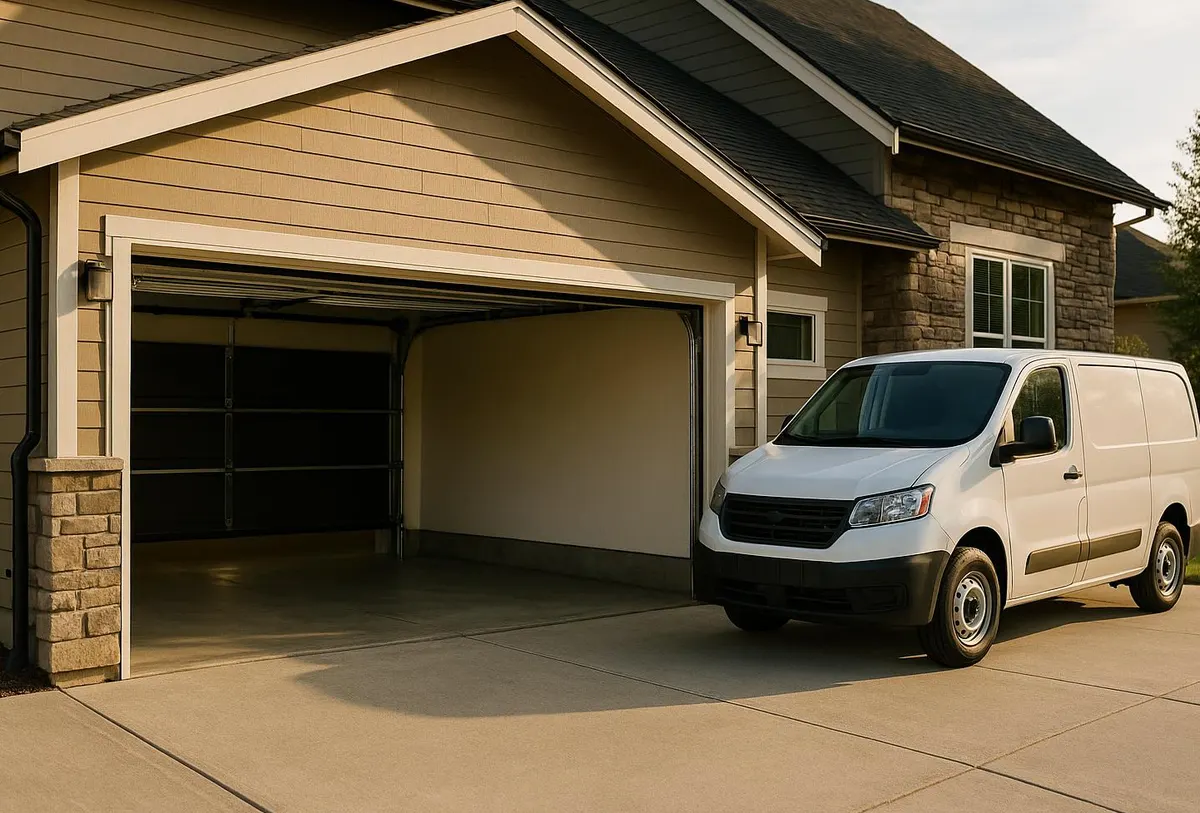
What a Technician Sees on a Typical Call This Time of Year
Most service calls in late fall start the same way: a homeowner says the garage door worked fine all summer, and now it's making a new noise, sticking partway up, or leaving a gap of daylight along the bottom. Nine times out of ten, it's not one dramatic failure. It's the door reacting to the season changing after months of heat, humidity, and hurricane-season storms. The weatherstripping that swelled in July is shrinking as the air dries out. The rollers and hinges that got a little grit-packed during afternoon downpours are finally grinding instead of gliding. And on any door near the coast, the salt air has been quietly working on exposed hardware all season, whether anyone noticed or not.
Why Florida's Version of Winter Still Matters for Your Door
Palmetto doesn't get snow or ice, but it does get real temperature swings: 80-degree afternoons followed by nights that drop into the 40s and 50s during cold fronts. That swing matters for a garage door more than people expect. Metal tracks and torsion springs contract slightly as temperatures drop, which can tighten tolerances just enough to turn a marginal alignment problem into a door that binds or a track that squeals. It's also the time of year when lubricant that worked fine in summer humidity can feel stiff or dried out, especially on rollers and hinges that haven't been serviced since spring.
Weatherstripping and Seals
Humidity swelling is common on garage doors here, particularly on wood or composite panels and on the rubber seals along the bottom and sides. As drier air moves in, that swelling reverses, and seals that looked snug in August can suddenly leave visible gaps. Those gaps let in cooler drafts, dust, and small pests looking for a warm, dry spot. Run a hand along the bottom seal and side weatherstripping on a cool morning; if you can see daylight or feel air movement, it's worth replacing the seal before the gap gets worse.
Post-Hurricane Season Hardware Check
By the time cooler weather arrives, hurricane season has usually put a door through its paces: wind-load stress, driven rain, and salt-laden air if you're anywhere near Terra Ceia, Bradenton Beach, or the coastal parts of Parrish and Palmetto. This is the right moment for a hands-on check rather than a quick glance:
- Tracks — look for rust spots, bent sections, or debris buildup from storm runoff.
- Rollers and hinges — check for grinding, wobble, or visible wear; nylon rollers often hold up better in salt air than steel.
- Cables and springs — look for fraying, rust, or gaps in the coils; these take on stress from humidity even when the door still opens normally.
- Fasteners — bolts and brackets near the coast corrode faster; a light coat of rust-inhibiting lubricant on exposed hardware goes a long way.
Test the Balance Before You Assume It's Fine
Cooler, drier air changes spring tension slightly, which is why fall is a good time to re-check door balance even if nothing seems wrong. Disconnect the opener, lift the door manually about halfway, and let go. A properly balanced door stays roughly in place. If it drifts down or slams, the spring tension has shifted enough to put extra strain on the opener, and that's worth addressing before it turns into a cable snap or a stuck door on a cold, rainy morning.
Opener and Safety Sensors
Summer storms are hard on garage door openers, between power surges, humidity getting into connections, and photo-eye sensors that can get knocked out of alignment by a bump or vibration. Wipe down the sensor lenses, confirm they're pointed directly at each other, and test the auto-reverse function by placing a scrap piece of wood in the door's path. If the door doesn't reverse immediately, that's a safety issue, not a convenience one, and it shouldn't wait.
A Short Maintenance Checklist for the Season Ahead
- Lubricate rollers, hinges, and springs with a garage-door-rated lubricant, not household oil.
- Tighten visible bolts and brackets, especially on doors that faced direct wind-driven rain this year.
- Replace bottom seal or side weatherstripping if gaps have appeared.
- Clean tracks of dust, salt residue, and storm debris.
- Test balance and auto-reverse safety features.
When to Call Palmetto Garage Door Experts
If the balance test shows a problem, if cables or springs look worn, or if the door's been sticking since the weather turned, that's past the point of a DIY fix. Palmetto Garage Door Experts handles Garage Door Maintenance & Tune-Up visits that cover exactly this kind of seasonal check, plus Garage Door Cable & Roller Replacement when salt air or storm wear has gotten ahead of routine upkeep. A technician can spot early rust, re-tension springs safely, and make sure the opener's safety features are actually working before winter guests, holiday deliveries, or cold snaps put extra demand on the door.
If your garage door is sticking, squealing, or leaving a gap this fall, call Palmetto Garage Door Experts for fast, local service across Palmetto, Bradenton, Ellenton, Parrish, Terra Ceia, Rubonia, Bradenton Beach, and Sarasota.